

GENEVA, Switzerland: Global health organization CEPI has committed roughly $60 million to accelerate the development of vaccines against the Ebola Bundibugyo virus, a deadly strain behind a growing outbreak in eastern Democratic Republic of Congo.
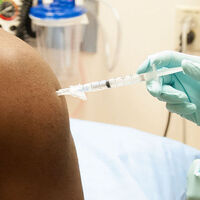
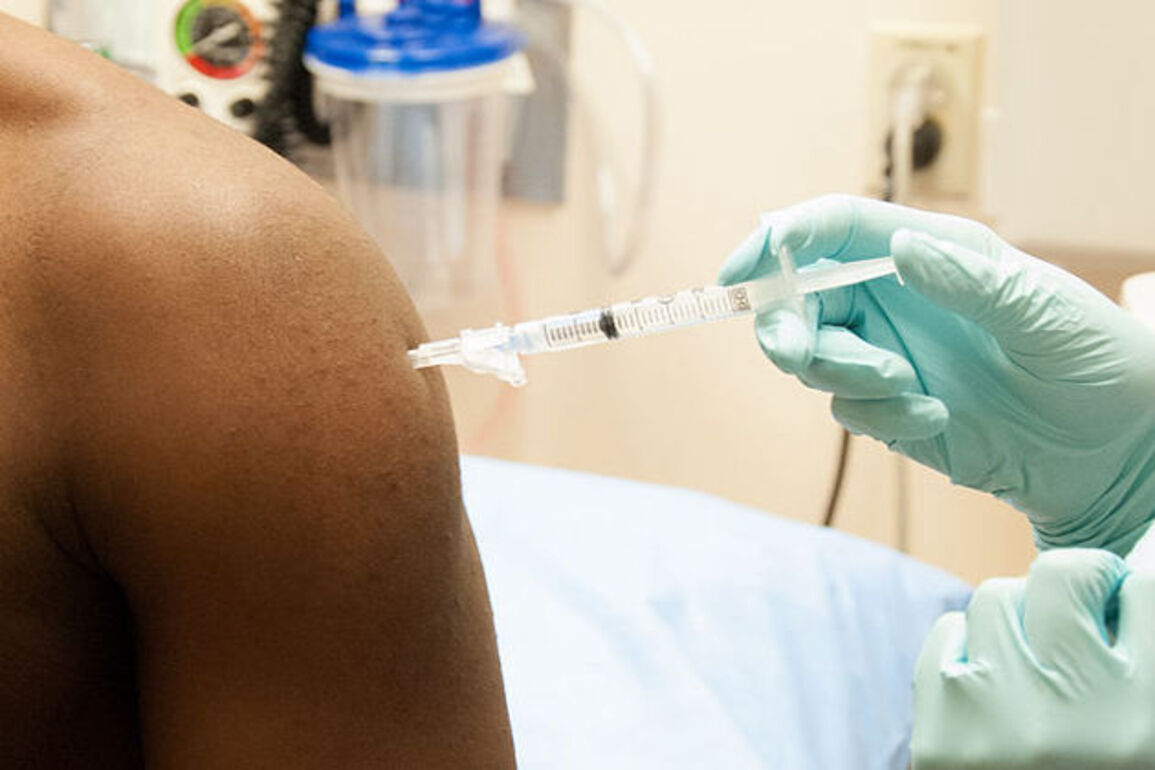
The funding will support vaccine programs led by Moderna, the University of Oxford and the International AIDS Vaccine Initiative (IAVI) as health authorities race to contain a disease for which no approved vaccines or treatments currently exist.
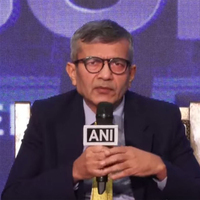
Richard Hatchett, chief executive officer of the Coalition for Epidemic Preparedness Innovations (CEPI), said it may be possible to have Ebola Bundibugyo vaccine candidates ready for clinical trials within a matter of months.
"There are currently no approved BDBV vaccines or treatments," Hatchett said, adding that the prospect of vaccines on "a not infinitely distant horizon" should help encourage discussions about funding and future deployment.
He cautioned, however, that vaccine development remains unpredictable and that the security situation in eastern Congo could complicate clinical trials.
According to the Africa Centres for Disease Control and Prevention and the World Health Organization (WHO), there have been 282 confirmed Ebola cases in Congo, including 42 deaths, along with about 1,100 suspected cases. Uganda has reported nine confirmed cases and one death. Global health agencies have classified the outbreak as a public health emergency.
CEPI has allocated up to $50 million to support preclinical and early-stage clinical development of Moderna's investigational Ebola Bundibugyo vaccine candidate. Moderna said the funding would also support manufacturing and, if early results are positive, progression into later-stage trials.
In addition, CEPI will invest up to $8.6 million in a vaccine developed by the University of Oxford and manufactured by the Serum Institute of India. An initial $3.2 million will also go toward an IAVI-developed vaccine candidate.
IAVI's single-dose Ebola Bundibugyo vaccine uses the same technology platform as Merck's approved Ervebo vaccine, which targets the Zaire strain of Ebola. The candidate has demonstrated survival benefits in animal studies.
Speaking during a press briefing, IAVI Chief Executive Officer Mark Feinberg said it remains unclear which organizations would ultimately oversee clinical trials for the vaccine.
"We understand from the WHO more recently that they won't be assuming that role in the future," Feinberg said, adding that it would require "tens of millions of dollars until we're in a position to enter the clinic."
The WHO did not immediately clarify its position on sponsoring or conducting future vaccine trials.
Oxford's vaccine candidate, known as ChAdOx1 Bundibugyo, uses the same technology that underpinned the Oxford/AstraZeneca COVID-19 vaccine.
Hatchett noted that Oxford and Serum Institute researchers demonstrated during last year's Rift Valley Fever outbreak in Mauritania and Senegal that vaccine doses could be prepared for trials in about six weeks, significantly faster than the years often required under traditional timelines.
Once vaccines are developed, ensuring access will become the next major challenge, Hatchett said. He noted that around 300,000 doses of Ervebo were needed to contain the 2018–2020 Ebola outbreak in a similar region of Congo.
Separately, vaccine alliance Gavi recently committed up to $50 million to support the Ebola response, while the World Bank's Pandemic Fund announced up to $220.6 million in grant funding.